The China NNN Agreement Template (Bilingual English & Chinese)
Stop your factory from copying your product, before you send a single drawing.
A China NNN Agreement, also called a Chinese NNN agreement, and sometimes an NNN contract, is a bilingual contract that stops a Chinese factory from disclosing, using, or selling your product before you share a single drawing. Unlike a Western NDA, which only blocks disclosure, it adds non-use and non-circumvention protection. This template uses PRC governing law, RMB liquidated damages, and 13 articles built for enforcement in Chinese courts.
The one contract that protects what you're about to share.
Non-Use Clause
They cannot manufacture your product for themselves or anyone else.
Non-Circumvention
They cannot go around you to your customers or sell into your market.
Non-Disclosure
They cannot leak your designs, specs, or supplier list.
13 bilingual articles. Built for Chinese courts.
- •Every clause in English and Simplified Chinese side by side
- •Liquidated Damages clause: a pre-agreed RMB penalty courts enforce without you proving exact losses
- •PRC governing law + jurisdiction at the factory's registered location
- •Company chop (公章) signature block: the red seal that binds a Chinese company
- •"Why this protects you" notes on every critical clause
- •How-to-use page + full Q&A section
- •Bracketed fill-in fields in both languages, customize in minutes
How it works
- 1Download the .docx, delivered instantly
- 2Fill in your company name and the factory's Chinese legal name + 18-digit USCC
- 3Set the RMB liquidated-damages figure with your lawyer
- 4Send to the supplier BEFORE sharing any drawings or samples
- 5Get the company chop on the signature page
The chop, not the signature
A scanned signature binds nobody. The red company chop does. Twenty five years in trade, and I still watch buyers send drawings on the strength of a PDF with a name typed at the bottom.
Here is what most Western buyers still miss. The chop is the company. If a factory stalls when you ask for it on the last page, that hesitation is your answer, and it arrives before your design does.
A contract nobody at the other end can read, and nobody there can enforce, is a comfort object. That is why this one is bilingual, why the Chinese text governs, why the damages are written in RMB, and why the chop line sits where it cannot be skipped.
I live in Shanghai and I am in factories most weeks. That work goes up on my YouTube channel and in my posts every week, so you can judge it before you buy anything from me.
I am not a lawyer, and you should still have one read this before you sign. It is a starting point, built by someone who has watched this go wrong.

Cengiz Gündüz - The Factory Floor
25 years in global trade. The last stretch on the ground in Shanghai, walking the factory floors myself. I sell industrial equipment out of China too, so I've got no supplier to push and no kickback in your order.
Solo operator. I personally answer every email.
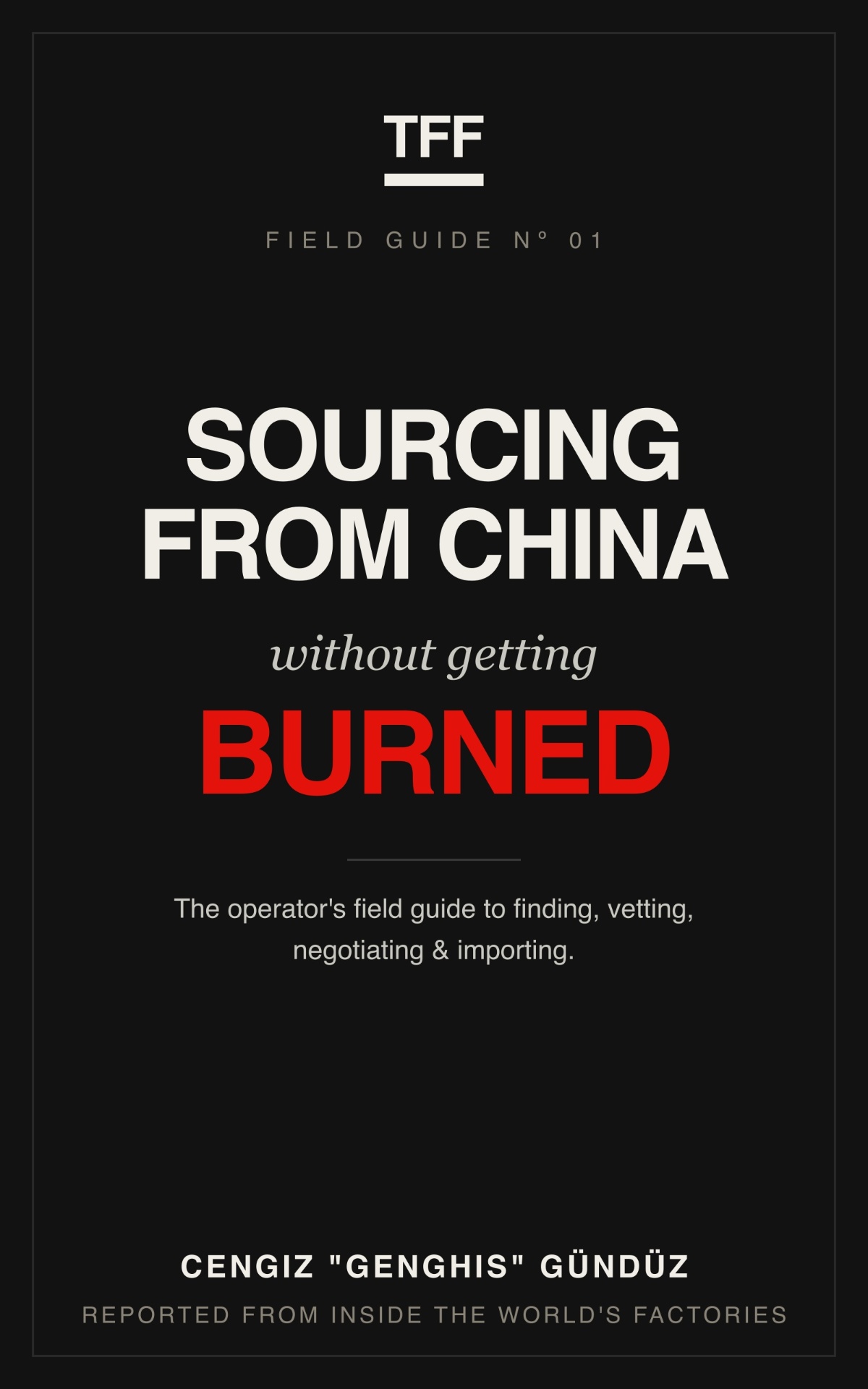
Author of "Sourcing From China Without Getting Burned", on Amazon Kindle.
The "Don't Get Burned" Guarantee
Use it on your next order. If it doesn't save you a headache, or a dollar, email me within 7 days and I'll refund you in full. No forms, no hoops. I'm one operator in Shanghai, and I answer every email myself. Cengiz
The China NNN Agreement, $47
Lawyers charge $300 to $800 to draft this. This NNN agreement China template is delivered as an editable, bilingual .docx built for China, for $47.
Get the Template, $47These contracts are based on real agreements I used in my own Chinese factory deals. I'm not a lawyer, which is why I priced them fairly. They worked for me. They can work for you.
⚠️ Professional template, not legal advice. Have a qualified PRC or Hong Kong lawyer review and finalize it, especially the Chinese text, which governs.
What buyers say
Early access: be one of the first to put this to work.
Common Questions
Is an NNN agreement enforceable in Chinese courts?
Yes. The template is built for enforceability in China: the Chinese version governs, it uses PRC governing law and jurisdiction where the factory is registered, and it includes RMB liquidated-damages clauses with Civil Code Article 585 pre-estimate language that Chinese courts will enforce.
Why won't a regular NDA work in China?
A standard NDA only stops disclosure. It doesn't stop a Chinese factory from using your design to produce and sell your product. An NNN adds the Non-Use and Non-Circumvention clauses that actually protect importers in China.
What is an NNN Agreement?
An NNN Agreement, also called a Chinese NNN agreement or an NNN contract, is a Non-Disclosure, Non-Use, Non-Circumvention contract used with Chinese factories before sharing designs or specifications. Unlike a Western NDA, it also prevents the factory from manufacturing your product for themselves or bypassing you to reach your customers. It is the NNN agreement China factory deals run on.
Are free NNN agreement templates safe to use?
Usually not. Most free NNN agreements online are English-only, use foreign governing law, or drop the Non-Use or Non-Circumvention clause entirely, so a Chinese court won't enforce them. A usable NNN contract has to be bilingual with the Chinese version governing, use PRC law, and set RMB liquidated damages.
How much does a China NNN agreement cost?
A lawyer typically charges $300 to $800 to draft a bilingual China NNN agreement. This ready-to-use NNN agreement China template is $47, the same three-protection structure (Non-Disclosure, Non-Use, Non-Circumvention), editable in minutes.
What file format is the NNN agreement template?
You receive a clean, editable Microsoft Word (.docx) file. It opens in Microsoft Word, Google Docs, or Apple Pages.
Keep reading
What to get next
The buyers who get the most from this pair it with the tools below. Each one protects the next step.
What's inside
- •Non-Disclosure, Non-Use, and Non-Circumvention: the three N's a US-style NDA doesn't cover, written for Chinese enforcement
- •Non-Use clause that stops the factory from using your design to make and sell your product to someone else, even if they never 'disclose' a thing
- •Non-Circumvention clause that stops them from going around you to your customers or selling out the back door
- •Chinese governing law and Chinese courts / CIETAC arbitration, so an injunction or damages can actually be enforced against the factory
- •Chinese-language controlling version so the agreement reads correctly where it would be litigated
- •Liquidated-damages provision: a pre-agreed dollar figure for breach, which Chinese courts will actually enforce and which makes the threat real
- •Company chop and authorized-signatory requirements so the binding entity is the one on the paper
- •Definition of confidential information broad enough to cover designs, specs, samples, supplier lists, and pricing
- •Plain-English clause notes: what each N does and why a Western NDA leaves it out
- •Instant download, fill-in-the-blanks, sent before you share a single drawing, reusable with every new supplier you vet
Why a Western template fails in China
A US-style NDA in China is a piece of paper that makes you feel safe. It is built around one idea: don't disclose my secret to a third party. But the factory you just handed your CAD files to doesn't need to disclose anything. They can simply use your design to run a night shift of your product and sell it themselves, or circumvent you and ship straight to the buyer you introduced. A Western NDA has no answer for that, because 'non-use' and 'non-circumvention' aren't its job. That's why China deals run on an NNN: Non-disclosure, Non-use, Non-circumvention. The other fatal flaw in the downloaded NDA is the same one that sinks every Western template here. It names a home-country court the factory will never see, with no Chinese controlling text and no liquidated-damages number a Chinese judge can act on. So even when they breach it, you can't do anything. An NNN written for Chinese law, with a real damages figure and the company chop, is one that actually bites. Send it before the first drawing leaves your laptop. After the design is out, you're negotiating with someone who already has it.
Frequently asked
NNN vs NDA: what's the difference and which one do I need for China?
An NDA covers one thing: don't disclose my confidential info to others. An NNN covers three: Non-disclosure, Non-use, and Non-circumvention. In China, the danger usually isn't disclosure. It's the factory using your own design to build and sell your product, or going around you to your customer. An NDA has no teeth against either. For China you want an NNN, and you want it governed by Chinese law so it's enforceable where the factory sits.
Is an NDA enforceable in China?
Often barely. A typical Western NDA names a US or UK court, has no Chinese-language controlling version, and has no liquidated-damages figure a Chinese court can enforce, so even a clear breach leaves you with a document and no remedy. An NNN written under Chinese law, with a pre-set damages number and the company chop, is what's actually enforceable on the ground here. The fact that your NDA 'looks' airtight in English is exactly the trap.
When should I send the NNN, before or after I share my design?
Before. Always before. The single most common IP mistake I see is emailing the CAD files or a sample to 'get a quote' and sending the NNN later. Once your design is on their server, your hold is gone. The NNN goes out first, gets signed and chopped, and only then does the drawing leave your laptop. This is the document you send at the very start of vetting any new supplier.
What is a company chop and why does it matter on an NNN?
The company chop is the official red company seal, and in China it frequently outweighs a signature for binding the company. An NNN signed by some sales contact with a pen, no chop, may bind no one with assets. This template requires the chop and an authorized signatory so the entity you're actually worried about is the one legally on the hook if your design walks.
Does the Chinese version of the NNN control over the English version?
If it's ever litigated in China, the Chinese version is what the court works from, so yes, you want a Chinese controlling-language clause, and you want the Chinese text to be accurate. English-only leaves you exposed to whatever translation surfaces in court. This template is built around that controlling-language structure; get the Chinese professionally checked before you rely on it for a big program.
Is this real legal protection or just a template?
Straight talk: it's a battle-tested NNN template built from real China sourcing deals, not custom legal advice for your specific design or deal. For vetting a new factory it puts you far ahead of a generic NDA or nothing at all. Before you hand over high-value IP for a major program, have China-trade counsel give it a once-over. That's what I'd do. A $47 file is the smart first move, not a bulletproof guarantee, and you already knew that.