The China Contract That Holds Up When the Order Goes Sideways
18 bilingual articles, the Chinese text governing. With the IP, deposit, and quality clauses most Western templates leave out.
$37, one-time. Run it on every order.
A China manufacturing contract is a bilingual agreement that binds a factory to your exact specs, with the Chinese version controlling in court. This 18-article template locks quality to approved samples, ties payment to inspection, adds RMB-denominated liquidated damages, and requires the company chop (公章) for enforceability.
Here's how it goes wrong. You and the supplier trade a friendly English PO over email, you wire the 30% deposit, and everyone's happy. Then the 5,000 units land in a different plastic and a different color, and when you point to the spec, the answer is "that was just a guideline." You take your English agreement to a lawyer in China and learn the part that matters: with no governing Chinese version and no company chop, you're holding paper that's hard to enforce where your money actually went. Deposit gone, container wrong, and not one clause that gives you a hold.
I'm in these buildings every week, and I've watched good importers get wrecked by a contract that looked airtight in English and carried no weight here. So I built the agreement I run on my own orders. It's bilingual with the Chinese text governing, the IP and quality terms are written the way these deals actually get enforced in China, and it ends with a real company-chop (公章) signature block instead of a signature that means little once a dispute starts. You fill in the blanks and send it before a dollar leaves your account.
What you get
- •18 articles, fully bilingual English / 中文, side by side and ready to send
- •A governing-language clause that makes the Chinese text control, the single thing most Western templates get fatally wrong
- •IP protection written for the Chinese system: no copying your design, no selling your product out the back door
- •Quality-standard terms that pin the supplier to the approved sample, so 'that was just a guideline' stops working
- •Payment tied to milestones, not trust. So your money moves when the work does, contract or no contract
- •An RMB liquidated-damages clause set at a number a factory has to take seriously, the anchor most buyers never bring to the table
- •A proper company-chop (公章) signature block, the part Chinese counterparts actually treat as binding
- •Editable Word document: open it, fill in your terms, send it the same day
Who it's for
For importers, Amazon private-label sellers, and procurement leads sending real money to a Chinese factory. Whether it's your hundredth order or your first.
But, couldn't I do this myself?
No, I'm not a lawyer. And you don't need to pay one $2,000 to get the three clauses that decide whether your contract means anything in China: the Chinese-governing language, the company chop, and damages set in RMB. A free OEM template gives you none of them. It's written for a U.S. deal, it feels safe, and it protects nothing once the dispute is happening on the other side of the world. This is the agreement I run on my own orders. Take it to your own counsel for a final read if you want belt-and-suspenders. Most buyers never had these clauses at all.
Who's behind it
I'm not a lawyer selling forms or a consultant who read about China. I sell industrial equipment out of China myself and walk supplier floors every week: the same eyes I use on my own orders, no vendor agenda, no supplier to upsell you.
What it's worth
One wrong order is a 30% deposit gone across a border with little recourse: tens of thousands of dollars on a serious buy. This is $37, once, and you run it on every order you ever place. Cheap insurance on an expensive mistake.

Cengiz Gündüz - The Factory Floor
25 years in global trade. The last stretch on the ground in Shanghai, walking the factory floors myself. I sell industrial equipment out of China too, so I've got no supplier to push and no kickback in your order.
Solo operator. I personally answer every email.
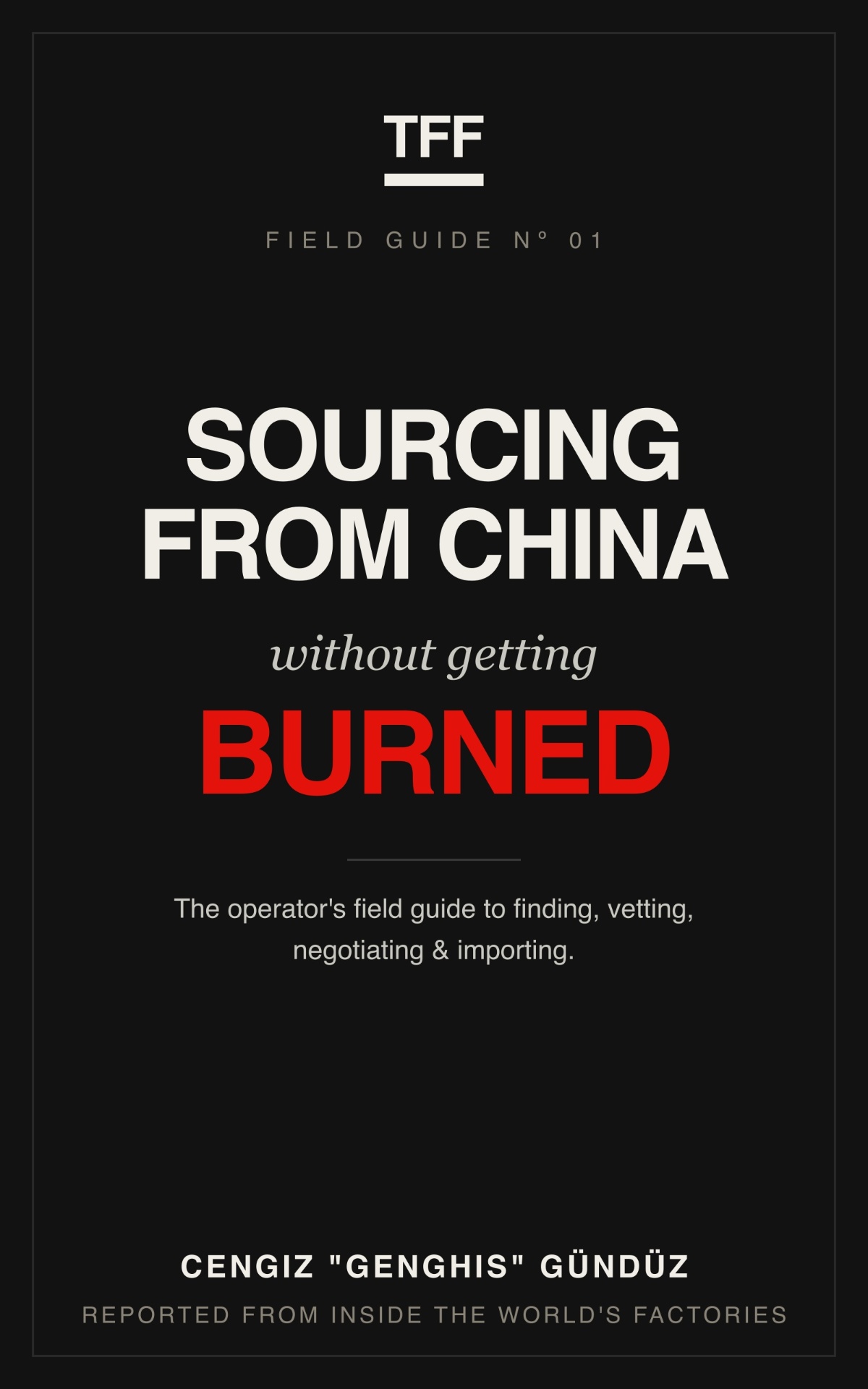
Author of "Sourcing From China Without Getting Burned", on Amazon Kindle.
The "Don't Get Burned" Guarantee
Use it on your next order. If it doesn't save you a headache, or a dollar, email me within 7 days and I'll refund you in full. No forms, no hoops. I'm one operator in Shanghai, and I answer every email myself. Cengiz
$37, one-time. Run it on every order.
Instant download. Editable Word doc, yours to keep, reuse it on every order for the rest of your importing life. Pay once. This is a battle-tested template, not legal advice. Have a qualified PRC or Hong Kong lawyer review and finalize it before you sign, especially the Chinese text, which governs.
From the people I work with
Trusted on the ground, not just online.
“In hardware, we often say that relationships are the foundation, not just a transaction. Cengiz completely embodies this philosophy. He has an incredible knack for bridging the gap between Western buyers and complex manufacturing landscapes. If you are a brand looking to qualify factories before wiring capital, source verified partners in China, or secure heavy industrial equipment, Cengiz is your guy. He doesn't just make introductions; he builds the trust and oversight needed to actually get things built right. I couldn't recommend him more highly.”
“I bought one of the contracts and used it directly with my factory in China. It saved me from paying a lawyer close to a thousand dollars for something fairly basic, and it covered exactly the points I needed protected. Two months later I'm still working with the same supplier, and everything runs smoothly. For any Western buyer who wants real protection without the big legal bill, this is worth it. Thank you to The Factory Floor.”
“Thank you for your continued support and your readiness to help. I sincerely appreciate it. I will keep in touch whenever anything is required. Wishing you and your team continued success.”
What to get next
The buyers who get the most from this pair it with the tools below. Each one protects the next step.