China OEM Agreement - Bilingual OEM Supply Agreement Template
The master contract that turns every purchase order into a protected order: molds, quality, IP, and RMB penalties a Chinese court will enforce.
A China OEM Supply Agreement is the master contract governing an ongoing factory relationship: sign it once and every future purchase order is pre-armored. It covers mold and tooling ownership, inspection-gated payment, epidemic-defect triggers, and anti-knockoff terms: bilingual, with RMB penalties enforceable in Chinese courts.
You're ordering month after month, on a pile of WeChat messages.
Sign it once. Every order is pre-armored.
What's inside
- •Master + Purchase-Order structure: each PO pulls in the agreement's teeth; factory fine print is killed
- •Tooling & mold ownership: your molds are yours when you pay; factory is a custodian; daily RMB penalty for non-return
- •Payment wired to inspection: 30% deposit, 70% only after goods pass; payment only to the licensed company account (stops the personal-account redirect scam)
- •Quality & AQL with real remedies: defect tiers with consequences, your inspector right, Epidemic Defect trigger
- •Anti-knockoff package: no third-shift overruns, no marketplace resale, no making your product for others, auditable records
- •Clean title-vs-risk split, late-delivery liquidated damages, buyer-favorable liability allocation (uncapped for IP, confidentiality, fraud)
- •Three working exhibits: Specifications, Pricing Schedule, Quality/AQL Standard
- •Company chop signature block capturing Chinese legal name, 18-digit USCC, legal rep, bank account
Why this one actually bites.

Cengiz Gündüz - The Factory Floor
25 years in global trade. The last stretch on the ground in Shanghai, walking the factory floors myself. I sell industrial equipment out of China too, so I've got no supplier to push and no kickback in your order.
Solo operator. I personally answer every email.
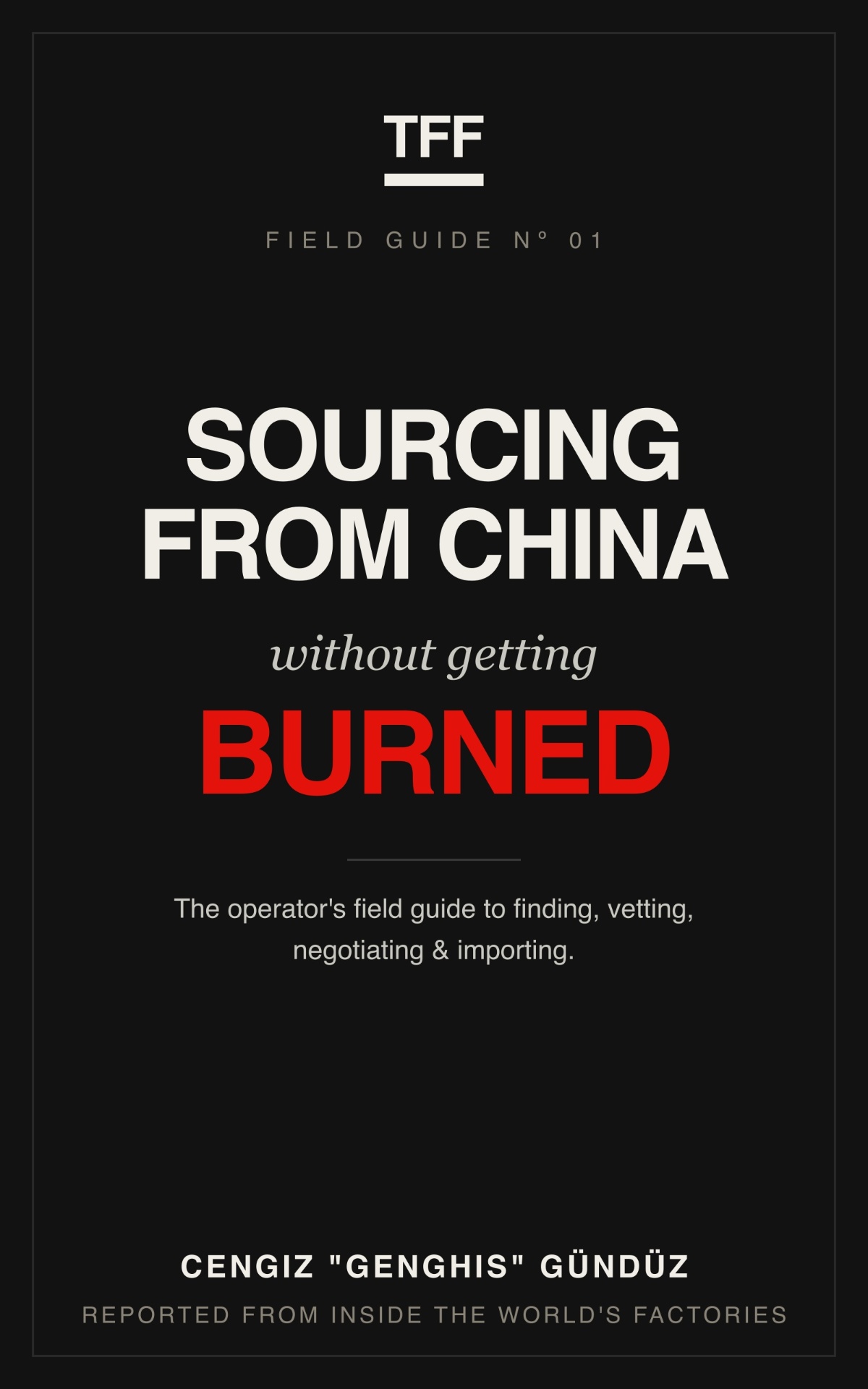
Author of "Sourcing From China Without Getting Burned", on Amazon Kindle.
The "Don't Get Burned" Guarantee
Use it on your next order. If it doesn't save you a headache, or a dollar, email me within 7 days and I'll refund you in full. No forms, no hoops. I'm one operator in Shanghai, and I answer every email myself. Cengiz
China OEM Supply Agreement - $57
Lawyers charge $800 to $1,500 to draft this. You get it for $57: 19 articles, three exhibits, chop-ready, bilingual.
Get the Template - $57These contracts are based on real agreements I used in my own Chinese factory deals. I'm not a lawyer, which is why I priced them fairly. They worked for me. They can work for you.
⚠️ Professional template, not legal advice. Have a qualified PRC or HK lawyer review, especially the Chinese text which governs.
What buyers say
Early access: be one of the first to put this to work.
Common Questions
Is this OEM supply agreement enforceable in Chinese courts?
Yes. The Chinese version governs, the deal sits under PRC law in the court where the factory is registered, and the teeth are fixed RMB liquidated-damages figures written with Civil Code Article 585 pre-estimate language Chinese courts will enforce without you proving exact losses.
How does mold and tooling ownership work in a China OEM contract?
The template specifies your molds are yours the moment you pay. The factory is a custodian with no lien rights. They must return physical tools AND digital files on demand, backed by a daily RMB penalty and a route to seize them in Chinese court.
Do I need a new OEM agreement for each order?
No. The OEM Supply Agreement is a master framework. You sign it once, then each purchase order pulls in all the legal teeth by reference. Each PO is a simple fill-in-the-blank that references the master agreement, killing the factory's boilerplate fine print.
What is a China OEM Supply Agreement?
A China OEM Supply Agreement is the master contract governing your ongoing supply relationship with a Chinese factory, covering pricing, tooling ownership, quality standards, payment terms, IP protection, and what happens if the factory makes defective goods or starts selling your product to competitors.
What is an Epidemic Defect clause?
An Epidemic Defect clause triggers when a defect rate exceeds a threshold across multiple shipments. This template includes liquidated damages for epidemic defects, giving you a pre-agreed remedy without needing to prove exact losses in court.
What to get next
The buyers who get the most from this pair it with the tools below. Each one protects the next step.
What's inside
- •Ongoing-supply framework for a repeat OEM relationship: pricing, lead times, minimum order quantities, and forecasting, not just a one-shot order
- •Locked product specs and quality standard that carry across every production run, so batch two can't quietly drift from batch one
- •Deposit/balance structure with inspection-before-balance on each order, so you never release final payment on bad goods
- •IP ownership and NNN-grade non-use / non-circumvention built in, so your OEM partner can't run your product on the side or go around you
- •Tooling and mold ownership clause so the molds you paid for are yours, and can't be held hostage when you reorder or switch suppliers
- •Chinese governing law and Chinese courts / CIETAC arbitration, enforceable where your supplier's assets are
- •Chinese-language controlling version and company-chop / signatory requirements
- •Price-adjustment and term/renewal mechanics so a multi-year relationship doesn't get repriced on you by surprise
- •Exit, transition, and tooling-handover terms for the day you change suppliers
- •Plain-English notes on every clause; instant download, reusable across your whole OEM supplier base
Why a Western template fails in China
An OEM supply relationship is where Western templates fail slowly instead of all at once. A generic one-off purchase contract papers a single order, but OEM is a relationship: repeat runs, evolving forecasts, molds you paid for, and a product the factory now knows how to build in its sleep. That's exactly the setup where the quiet bleed starts. Batch one is perfect because it's the sample run; batch four drifts on spec and 'it's within tolerance.' The tooling you financed sits on their floor, so when you ask for a better price or float switching suppliers, suddenly your molds are 'in maintenance.' And because they can now build your product end to end, the temptation to run a night shift and sell it themselves is real. A US supply template addresses none of this, and it still carries the original sin of every Western contract here: home-country governing law that's unenforceable in China, no Chinese controlling version, no chop. An OEM agreement built for China locks the recurring spec, nails down mold ownership, carries non-use and non-circumvention across the whole relationship, and puts disputes in the one forum where your supplier can actually be made to answer.
Frequently asked
What's the difference between an OEM and an ODM agreement?
OEM (Original Equipment Manufacturer) means the factory builds your design to your spec. The IP is yours. ODM (Original Design Manufacturer) means the factory's existing design gets your logo on it. The IP is largely theirs. The contracts differ sharply on who owns what. This is an OEM supply agreement: it's written for your design, your tooling, your IP, and it's built to keep all three on your side of the line across an ongoing relationship.
Who owns the tooling and molds in an OEM deal, me or the factory?
If you paid for the tooling, you should own it, and the contract has to say so explicitly, or those molds become a hold the factory has over you. The classic move: you ask for a better price or mention switching suppliers, and your molds are suddenly unavailable. This agreement includes a tooling and mold ownership clause plus handover terms, so the molds you financed are yours to move when you decide to move them.
How do I stop my OEM supplier from selling my product to someone else?
You build non-use and non-circumvention into the supply agreement itself, governed by Chinese law. Your OEM factory can build your product end to end, which is exactly why the temptation to run it on the side or ship straight to your customers exists. NNN-grade clauses, enforceable in a Chinese forum with a real damages figure, are what make that a contract breach with teeth instead of a risk you just hope doesn't happen.
Should an OEM supply contract be under Chinese law or my home country's law?
Chinese law, with Chinese courts or CIETAC arbitration, in almost every case. An ongoing OEM relationship gives you more surface area for things to go wrong over time, which makes enforceability matter more, not less. A home-country judgment won't be enforced against a Chinese supplier. This template puts disputes where your supplier's bank accounts and machines actually are.
How do I keep quality consistent across repeat OEM production runs?
You lock the spec and quality standard into the master agreement so it governs every run, and you keep inspection-before-balance on each order so payment is always tied to passing goods. The slow-drift problem (perfect sample run, then quality creeping down by batch four) is a contract problem before it's a QC problem. This agreement ties every reorder back to the original approved standard, so 'within tolerance' has a defined edge.
Is this OEM template legal advice, and will it hold up in China?
Straight talk: it's a battle-tested OEM supply template built from real China sourcing relationships, not custom legal advice for your specific program. For a growing supplier relationship it puts you far ahead of running everything off the factory's invoices. Before you commit serious volume or multi-year tooling spend, have local counsel review it. That's exactly what I'd do. A $57 file is the smart operator's shortcut, not a guarantee, and you already know that.