Exclusivity Agreement with Chinese Supplier, $57
Lock your exclusive territory. Stop your supplier from selling around you. Built to be enforceable in China.
A China exclusive distribution agreement locks your territory and legally stops your supplier from selling around you. This 22-article bilingual template sets exclusivity, minimum-purchase commitments, audit rights, most-favored-nation pricing, and RMB liquidated damages per unauthorized sale: governed by PRC law and enforceable in Chinese courts.
Your "exclusivity" is only as strong as the paper it's on.
What's inside
- •Territory definition with exclusivity rights and clear scope
- •Minimum purchase commitment structure to keep exclusivity active
- •Competitor lockout: supplier cannot sell to your competitors, distributors, or customers in your territory
- •IP and brand protection: who owns packaging, designs, and brand assets developed during the relationship
- •Pricing and most-favored-nation clause
- •Audit rights: verify the supplier isn't selling around you
- •Termination and inventory buyback terms
- •RMB liquidated damages per unauthorized sale
- •22 bilingual articles, 5 working exhibits, company chop signature block
Chinese version governs. Chinese court decides.

Cengiz Gündüz - The Factory Floor
25 years in global trade. The last stretch on the ground in Shanghai, walking the factory floors myself. I sell industrial equipment out of China too, so I've got no supplier to push and no kickback in your order.
Solo operator. I personally answer every email.
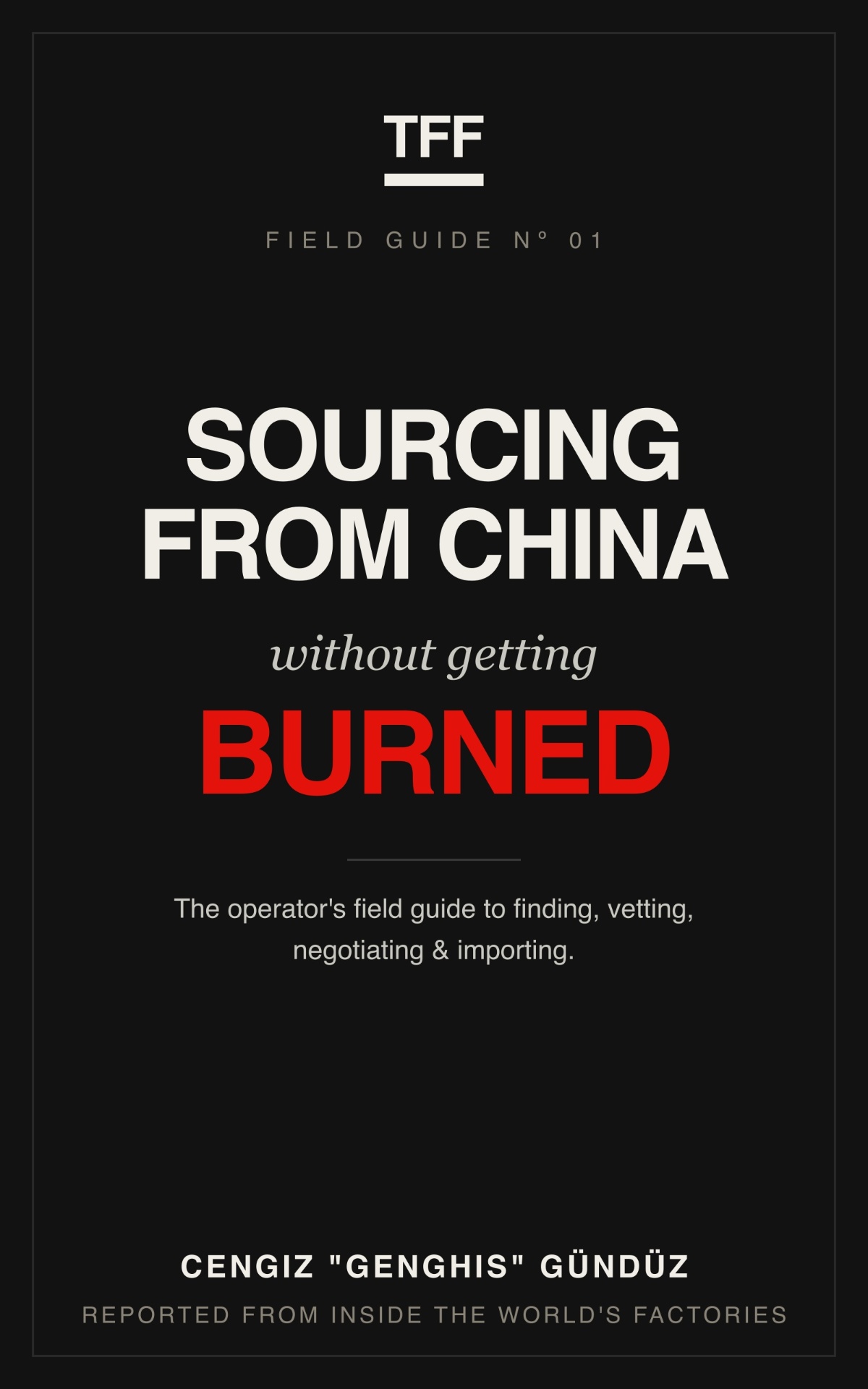
Author of "Sourcing From China Without Getting Burned", on Amazon Kindle.
The "Don't Get Burned" Guarantee
Use it on your next order. If it doesn't save you a headache, or a dollar, email me within 7 days and I'll refund you in full. No forms, no hoops. I'm one operator in Shanghai, and I answer every email myself. Cengiz
China Exclusive Distribution Agreement - $57
Lawyers charge $1,000 to $1,500 to draft this. Get the template for $57.
Get the Template - $57These contracts are based on real agreements I used in my own Chinese factory deals. I'm not a lawyer, which is why I priced them fairly. They worked for me. They can work for you.
⚠️ Professional template, not legal advice. Have a qualified PRC or HK lawyer review, especially the Chinese text which governs.
What buyers say
Early access: be one of the first to put this to work.
Common Questions
How do I stop my Chinese supplier from selling around my exclusivity?
This template includes fixed RMB liquidated damages per unauthorized sale, enforceable in a Chinese court without needing to prove your exact losses. It also includes audit rights so you can verify compliance.
Does the agreement protect my brand and IP?
Yes. The agreement includes IP ownership and usage restrictions, plus provisions that govern who owns packaging designs and brand materials developed during the relationship.
What is a China Exclusive Distribution Agreement?
It locks your exclusive right to resell the supplier's products in a defined territory and bars the factory from selling around you to your competitors, distributors, or directly to your customers in that territory.
What is the minimum purchase requirement?
The template includes a minimum purchase commitment framework, a bracketed field you fill in to define the volume threshold that keeps your exclusivity active. If you don't hit minimum volume, the agreement gives the supplier the right to convert exclusivity to non-exclusive.
What to get next
The buyers who get the most from this pair it with the tools below. Each one protects the next step.
What's inside
- •Defined exclusive territory and channel, so everyone knows exactly where the distributor can and can't sell
- •Performance minimums and minimum-purchase targets: exclusivity that the distributor has to earn and keep earning, with the right to pull it if they don't
- •Trademark and brand-use controls so your mark is licensed, not handed over, and can't be registered out from under you
- •Anti-circumvention and anti-grey-market terms to stop product leaking outside the territory or back to your other channels
- •Pricing, payment, and stock/inventory terms, with the protections you need before goods or credit go out
- •Term, renewal, and clean termination mechanics, including what happens to remaining stock and the trademark on exit
- •Chinese governing law and Chinese courts / CIETAC arbitration, enforceable where the distributor operates
- •Chinese-language controlling version and company-chop / authorized-signatory requirements
- •IP and confidentiality provisions so your customer lists, pricing, and brand assets stay protected
- •Plain-English notes on every clause; instant download, reusable as you appoint distributors across regions
Why a Western template fails in China
An exclusive distribution agreement in China has a trap a Western template never warns you about: trademark squatting. China is first-to-file. If you hand a distributor your brand without locking down who owns and controls the mark, you can wake up to find your distributor, or a stranger, has registered your trademark in China and can now block you from your own product. A generic Western distribution contract assumes your trademark is safe because you own it back home. It isn't, not here. Then there's the exclusivity problem: 'exclusive' with no performance minimums means you've handed one company a lock on a huge market with no obligation to actually sell, and you can't easily take it back. And grey-market leakage, product flowing out of the exclusive territory and undercutting your other channels, needs explicit anti-circumvention terms a US template doesn't carry. Stack on the usual fatal flaw, a home-country court clause that's unenforceable against a Chinese distributor, and a downloaded template leaves your brand, your market, and your margin all exposed at once. This agreement is built for the Chinese reality: trademark control, earned exclusivity, territory enforcement, and a dispute forum that actually reaches the distributor.
Frequently asked
How do I protect my trademark in an exclusive distribution deal in China?
First, understand China is first-to-file. Whoever registers the mark first generally owns it, regardless of who used it first abroad. The most common nightmare is a distributor registering your brand in China and then holding it over you. This agreement licenses the mark to the distributor under strict controls and bars them from registering it themselves, but the real move is to file your own China trademark before you appoint anyone. The contract protects the relationship; the registration protects the brand.
Should an exclusive distribution agreement require minimum purchase or sales targets?
Yes. Exclusivity without performance minimums is a gift you can't take back. You've locked one distributor onto a whole territory with no obligation to move volume, and your market sits frozen. This template ties exclusivity to minimum-purchase or sales targets and gives you the right to downgrade or terminate exclusivity if they miss. Exclusive should mean 'earns it every quarter,' not 'owns it forever.'
What stops a distributor from selling outside the agreed territory or grey-market leaking?
Explicit territory limits plus anti-circumvention and anti-grey-market clauses. Without them, product leaks out of the exclusive region, undercuts your pricing in other markets, and poisons your other distributors. This agreement defines the territory and channel tightly and builds in the terms that make out-of-territory selling a clear breach, enforceable in a Chinese forum where the distributor actually operates.
Should the distribution agreement be governed by Chinese law or mine?
Chinese law with Chinese courts or CIETAC arbitration, in most cases, because the distributor and its assets are in China. That's where you'd need to enforce trademark control, collect on unpaid stock, or shut down an out-of-territory leak. A home-country judgment won't reach them. Naming a court back home feels protective and protects nothing on the ground. This template puts disputes where the distributor can actually be made to comply.
What is a company chop and does the distributor need to apply it?
The company chop is the official red seal a Chinese company uses to bind itself to contracts, and it often carries more weight than a signature. A distribution agreement signed by an individual with no chop may not bind the company you're actually counting on. This template requires the chop and an authorized signatory so the entity with the assets and the obligations is genuinely on the hook.
Is this distribution template legal advice, and will it hold up in China?
Straight talk: it's a battle-tested exclusive distribution template built from real China deals, not custom legal advice for your specific brand or territory. For appointing a distributor it puts you far ahead of a generic Western contract that ignores trademark squatting and earned exclusivity. Before you grant exclusivity over a major market, have local counsel review it and get your China trademark filed. That's exactly what I'd do. A $57 file is the smart starting point, not a guarantee, and you already know that.